
Look at any modern city skyline, and you will notice a shimmering sea of glass. Observers often assume these facades hold the structure up, but commercial curtain walls carry absolutely zero building weight. They literally hang from the concrete floor slabs just like a fabric curtain.
Serving as the protective skin of commercial building design, this non-structural barrier blocks weather without supporting the interior bones. According to architectural design principles, these lightweight frameworks rely on thin metal grids to safely secure heavy glass panes.
Wrapping skyscrapers in glass might sound like a massive energy drain. However, industry data reveals that advanced curtain wall systems use hidden thermal barriers to stabilize indoor temperatures, drastically lowering daily utility costs.
If a glass facade isn’t holding the building up, what exactly does it do? In architecture, a structure’s sheer physical weight is called the “dead load,” which the inner skeleton handles completely.
Instead of fighting gravity, the outer glass fights the elements. Think of an umbrella: it doesn’t carry your weight, but it must survive a storm without snapping. This lateral pressure is the wind load, and meeting strict high-rise building wind load requirements keeps skyscrapers perfectly safe.
Look closely at commercial curtain walls in Houston or elsewhere, and you will spot a thin metal grid separating the glass. These vertical and horizontal frames, called mullions, are the core components of a curtain wall system.
Mullions securely transfer fierce wind pressures right back into the building’s strong structural core. Yet, blocking heavy storms is only half the daily battle; stopping the winter cold requires hidden thermal breaks to prevent heat loss.
Even thick skyscraper windows won’t keep an office warm if the metal holding them acts like an icy highway. Because metal is an excellent conductor, winter chill travels rapidly through a solid frame, proving the thermal performance of structural glazing depends heavily on its skeleton rather than just the glass.
To stop this energy drain, engineers use aluminum framing thermal break technology. This hidden plastic bridge blocks the transfer in three steps:
Interrupting the solid metal boosts a building’s thermal performance, minimizing heat loss and reducing seasonal utility bills.
Imagine standing behind a giant magnifying glass on a summer afternoon. Unprotected architectural glass lets in beautiful natural light, but it also traps the sun’s roasting heat—a problem known as solar heat gain. To stop skyscrapers from becoming massive greenhouses, manufacturers apply microscopic metallic layers called Low-E (Low Emissivity) coatings directly to the window panes.
These invisible shields work like high-tech sunglasses for the building. They cleverly sort the solar spectrum, allowing bright visible light to stream inside while bouncing invisible, heat-carrying infrared rays back outdoors. Occupants get to enjoy the bright sunshine and stunning city views without feeling like they are sitting next to a space heater.
Blocking that thermal energy drastically improves a structure’s overall energy efficiency. Consequently, one of the greatest benefits of low-e coatings for large buildings is that developers can downsize their massive air conditioning systems.
Keeping rain out seems simple: just seal every joint tightly. Unfortunately, relying purely on caulking eventually causes glass seal failure when materials naturally degrade. Surprisingly, learning how to prevent water infiltration in glass facades requires a counterintuitive approach: intentionally letting the walls breathe.
For water to actually get indoors, three specific conditions—the “Trinity of Leaks”—must perfectly align:
Rather than hopelessly plugging every microscopic hole, architects simply eliminate the pressure. Using the pressure-equalized rainscreen principle, they design a hollow air chamber just behind the outer glass. When wind blows, air enters this chamber to match the outside force, neutralizing the push so water harmlessly drains away down the exterior.
Engineering a wall that both breathes and deflects heavy storms provides robust weather protection and long-term durability.
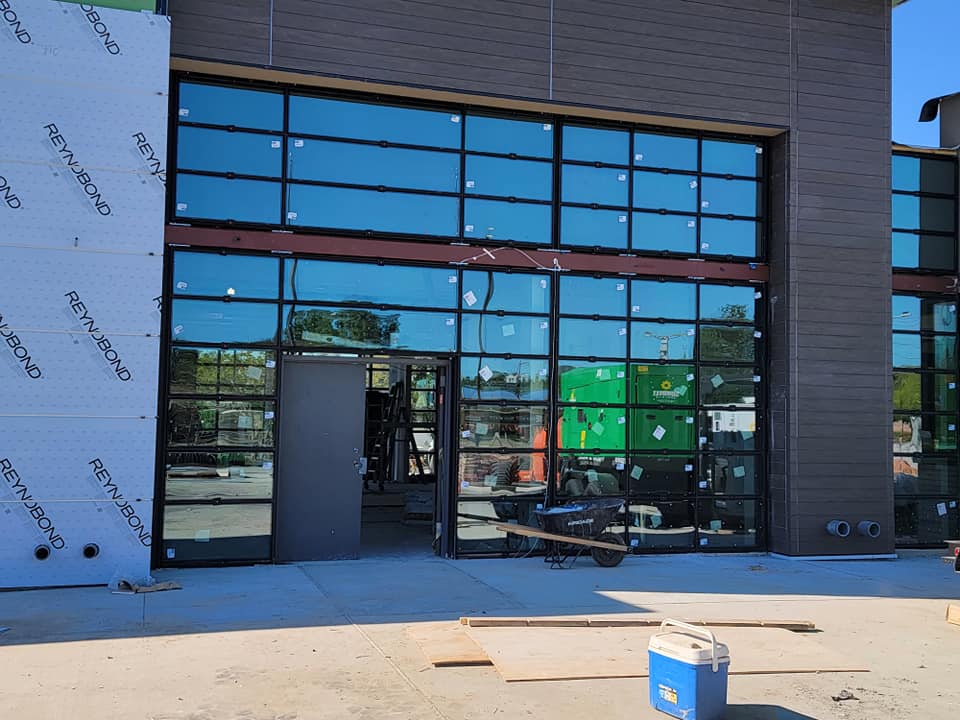
Building a glass facade fifty stories in the air is notoriously difficult. The traditional approach describes a stick-built system, where workers assemble metal frames and install glass piece by piece on site. It remains highly customizable, but outdoor assembly takes considerable time.
Smarter commercial building design solves these high-altitude headaches by shifting work indoors. The unitized glazing installation process creates large, fully assembled wall panels inside a climate-controlled factory. These pristine, factory-sealed blocks are then shipped and snapped together like interlocking puzzle pieces, guaranteeing superior weather protection.
The choice between unitized vs stick-built systems ultimately requires balancing upfront budget against strict construction timelines. While factory units cost more initially, rapid installation drastically reduces expensive on-site labor and accelerates project completion.
Commercial curtain walls function as high-performance, breathing skins rather than simple glass boxes. The return on investment for high-performance glazing is clear: abundant natural light paired with dramatically lower energy bills.
Evaluate any new glass building project with this 3-point Energy Efficiency Audit:
Architects are already exploring double skin facade energy efficiency—acting like wearing two shirts for extra insulation. Ultimately, smart design ensures these breathtaking glass structures remain beautiful, safe, and wonderfully sustainable.